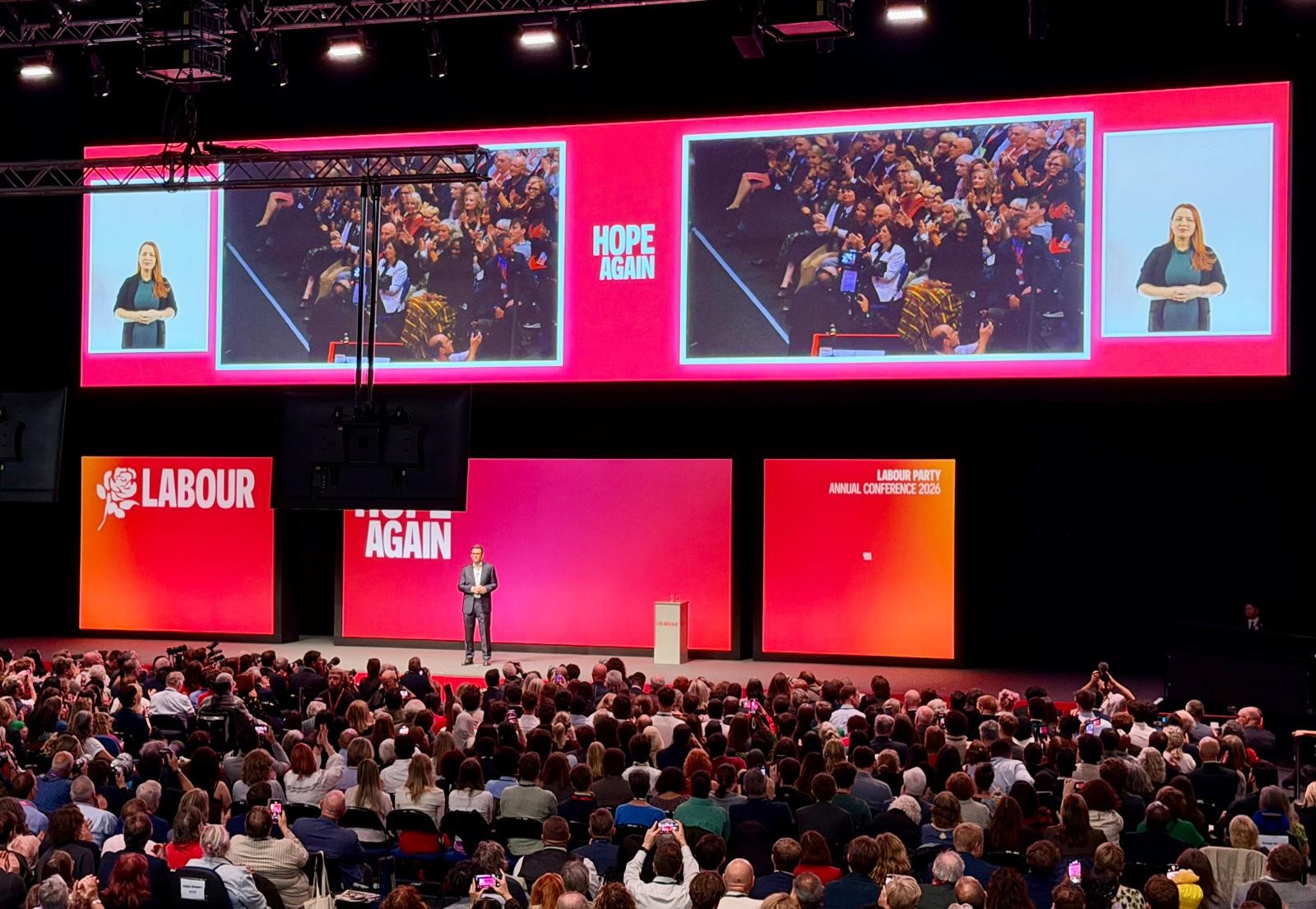
At this year’s Labour Party Conference in Liverpool, the Prime Minister has set out a clear direction for the country that will break with ‘politics as usual’ and draw a line on a decade of division.
Hope comes from honesty, which is why we must admit that Britain has been on the wrong path for a long time. After deindustrialisation, deregulation, privatisation, austerity and Brexit, we have been left with a UK that is run for vested interests, with power held in too few hands.
During his speech, which closed the conference, the Prime Minister vowed to take on the issues that have been ignored by politicians for too long, including social care and youth unemployment to create a Britain for all of us, regardless of who we are or where we were born.
I know from my own engagement with constituents, as the Member of Parliament for Portsmouth South, that the effects of this state of affairs have been felt across our city, with families and individuals struggling for years.
That is why the Prime Minister has vowed to make a break with the direction of the past 40 years and put Britain on a new path with greater public control of energy, water and housing.
This new direction comes as after a series of immediate measures to give people breathing space, including capping bus fares at £2 in 2027, taking VAT off electricity bills which are set to take effect on 1 October 2026. These measures can be read about in further detail here.
Now, the Prime Minister set out the long-term fixes Britain needs to start believing again and lift it back up to where it should be, so that people across the UK can hope again, including:
A new National Care Service:
- The Prime Minister promised ‘a new social contract for the 21st century’ in his speech. This includes establishing a National Care Service as soon as possible in the next parliament. It will be founded on the same principles as the NHS, where everyone contributes and everyone is covered
- This will provide free personal care for older people, giving them peace of mind that their needs will be met, supporting higher quality and preventative care, and protecting the homes and savings they have built up over their lifetime. It will also widen their care options, including staying at home longer if they wish
- The Prime Minister warned today that if we don’t fix our broken social care system, it will eventually break the NHS too. The NHS is under immense pressure with people stuck in hospital beds they don’t need. The Labour leader made clear today that he is going to grasp this issue and not let the same old politics stand in the way
- As part of her review, Baroness Casey has been asked to provide recommendations on how and when we build up the National Care Service. Her work will include public deliberation to ensure the public’s priorities are reflected in recommendations and ongoing cross-party talks seeking to build political consensus
- The triple lock adjustment the Prime Minister announced will save £15bn a year by the end of the 2030s, rising to £50bn a year by 2050. This will help to fund the National Care Service as well as ensure a sustainable State Pension. The savings from the adjusted triple lock will build up over time, as will the National Care Service
Greater public control of water:
- The Prime Minister has confirmed that Labour will remove the Thatcher-era ban on the government having public control of water companies. As part of the Prime Minister’s determination to deliver public control of the essentials of life, Labour will scrap ideological barriers to a water system that works for the public, introduce new powers for Mayors to hold water companies to account and tighten the ban on executive bonuses
- The ideological ban on government share ownership of water companies was introduced by Thatcher in 1989 but doesn’t exist for any other utilities. The UK has been a global outlier in having such a privatised water system
- The Prime Minister said in his speech that he will repeal this outdated measure, paving the way for greater public control of failing water companies so that we can deliver a water system that works in the public interest
- Mayors will be given new powers to hold water companies to account, putting power back in the hands of communities which have too often felt powerless in the face of poor performance, pollution and underinvestment
- The Environment Secretary, Dame Angela Eagle, will also launch a review into loopholes in the ban on water executive bonuses. Taken together, these measures mark the start of a transformation of the water system, putting it back in the service of the public
- Current limits set out in the Water Act 1989 on government ownership of shares in major water and sewerage companies will be removed. These limits vary between 1-3% depending on the company. Further details will be set out in the 10-year plan for Britain, to be published later this year. These changes will be delivered by a strengthened Water Bill
Greater public control of energy:
- The country is facing an energy cost crisis. The price of energy is crippling for businesses, and British billpayers pay some of the highest energy costs in Europe. That’s why the Prime Minister has made the commitment to bring down energy costs by introducing greater public control in the system
- He is determined to bring hope again to the country and he will set a new ambition to reduce energy costs so that they are in line with other countries in Europe within ten years
- The Government will reform the broken energy market so it serves the public interest. As part of this, the Prime Minister has announced that he will introduce a new publicly owned body within Great British Energy – Great British Grid (GB Grid) – to help improve competition, speed up grid connections for businesses, support reindustrialisation and drive down bills
Greater public control of housing:
- The Prime Minister said in his conference speech that he will increase public control of housing to ensure housing serves and supports those who need it most
- For too long, private landlords have taken advantage of a shortage of council housing to exploit private renters. In the worst cases, tenants are trapped in homes literally left to rot – risking their health and blighting our towns and cities
- Labour will back councils with the powers and resources necessary to call time on rogue landlords and compulsory purchase properties that fall below acceptable standards and where landlords have refused to make improvements. Not only will this directly improve the condition of long-neglected properties, but it will also bring more homes into council ownership
- The Government will look at the case for legislating to ensure the compulsory purchase system is a fully effective enforcement tool for councils to take action against the worst conditions and persistent rogue landlords. In the meantime, updated guidance and resources will ensure councils are making full use of existing powers to improve properties and end rogue landlords’ business models
- The Government will also complete reforms to Right to Buy to ensure it doesn’t come at the expense of public housing stock. The Social Housing Bill, currently going through Parliament, will exempt new-build council homes from the Right to Buy for 35 years. It will also exempt new-build homes in rural areas, which are more difficult to replace
A new National Commission on Electoral Reform:
- The Prime Minister announced that he will establish a new National Commission on Electoral Reform to ensure our voting system can better give power to people in every postcode
- The current system leaves too many people out and means some people in some places matter more than others
- He said that if we are going to rewire Britain so that power flows properly right through the land, we have to move to a situation where every vote counts towards the make-up of our Parliament
- All political parties will be invited to take part. Community groups, trade unions, businesses, faith groups and voters of all parties and none will also have the chance to participate. The Commission will report before the next general election
Strengthening our relationship with Europe:
- The Prime Minister used his speech to say that Brexit had done more harm than good and that we need to build stronger links with the EU to restore a higher level of growth and prosperity for Britain
- The Prime Minister said he would take the opportunity around the EU summit in November to lay out to the country what he believes are the different options for Britain’s long-term relationship with the EU
Reforming the education and welfare system:
- The Prime Minister said the Government will await the final report from Alan Milburn’s review, but that he is committed to changing the education system and the welfare system
- The Government will rebuild a system of comprehensive education, with parity between academic and technical routes and good quality pathways for all from 14,
- It will also provide the right support when needed, this includes:
- A 45-day work placement between 16 and 18
- An apprenticeship at 18
- No long waits for mental health support
- This will be funded through a fundamental rethink of the welfare system and how it interacts with young people. This is about investing in people’s success, rather than abandoning them and paying for failure
Later this year, this Government will publish a Plan for Britain. It will set out how, over 10 years, Labour will make this country work for working people again. More control of the basics and more power in the hands of people and places to set their own ambitions.
Stephen Morgan MP