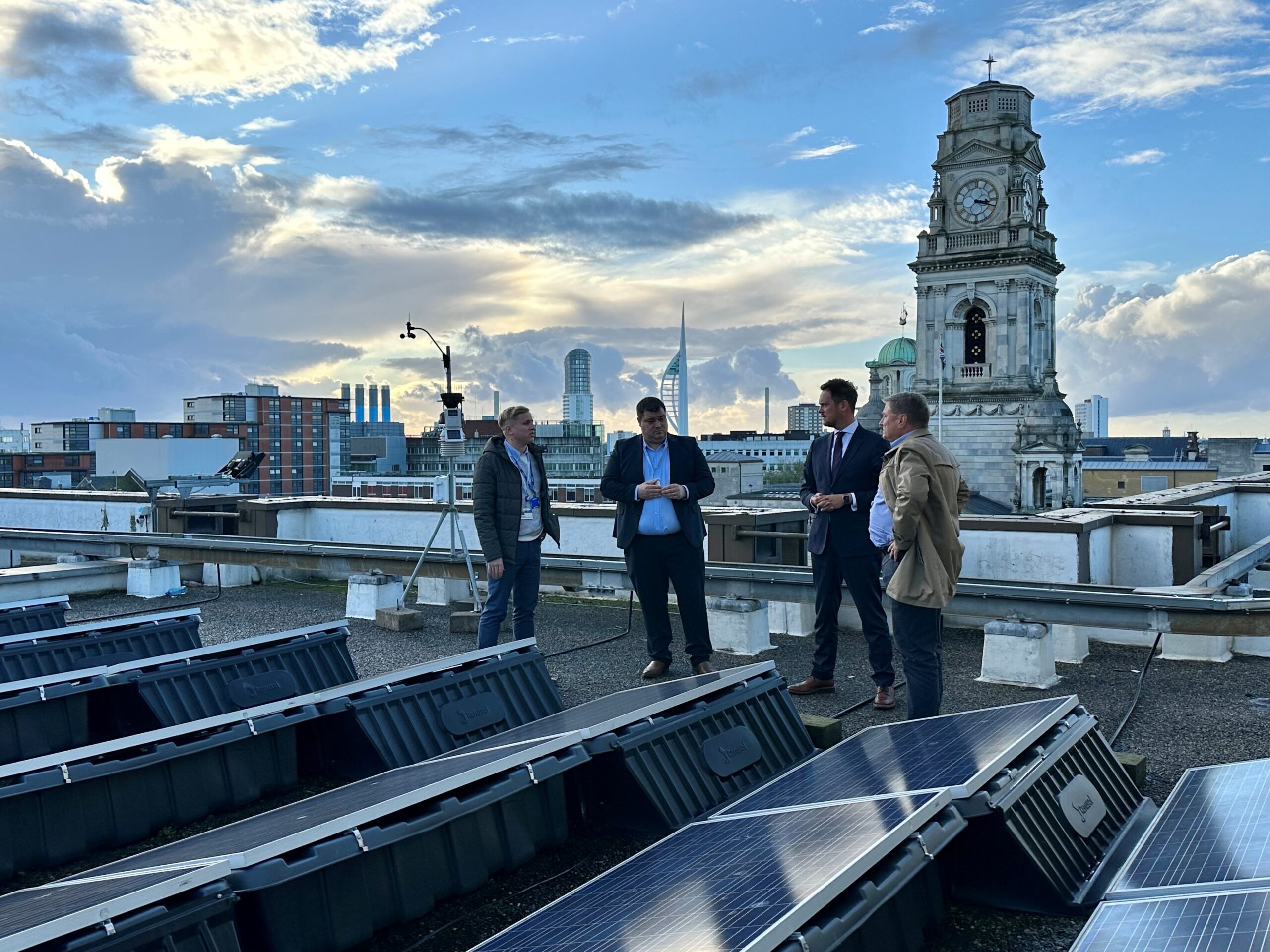
When I speak to people across Portsmouth South, one thing has come up again and again this summer: the weather
From the heat that’s made it hard to sleep and work to the very real risk of wildfires – climate change is no longer a distant threat.
It’s happening here, now, to people across Portsmouth. Even everyday pleasures like sitting outside for a picnic in the summer have become unbearable and at times dangerous.
In Portsmouth alone, we have seen our local hospital declare a critical incident, refrigeration units at local shops breaking down and leading to food being wasted, and green spaces turning into brown tinderboxes, with wildfire scares in Eastney.
All of this is concerning. We know that unless we act on climate change it is only going to get worse and as the Prime Minister recently said, we cannot accept this as the new normal. That’s why I’m proud to be part of a government taking climate change seriously.
Since taking office, this Government has secured over £100 billion in clean energy investment, £15 billion through the Warm Homes Plan to install solar panels and heat pumps, and over £1.4 billion to protect out coastlines through sea defences schemes.
This is in addition to action to clean up our rivers and seas, through the Water (Special Measures) Act passed last year ending the era of water companies marking their own homework and paying out dividends to shareholders while failing on their environmental obligations.
Here in Portsmouth, I’ve been proud to have lobbied for £17.6 million to fund our vital sea defence works in Southsea, worked closely with local stakeholders to hold Southern Water to account for sewage pollution and met with local businesses delivering home upgrades through the Warm Homes Plan. You can read more about my work on this issue here.
Not only do these measures help to protect our city for the future from the devastating effects of drought and flooding, but the green economy is the fastest growing sector, growing three times faster than the rest of our economy and creating decent jobs in every region of the country.
But, as we see wildfires spread and rivers run dry, the Conservatives have pledged to scrap the Climate Change Act, while Reform want to scrap all climate targets, restart fracking and bring back coal.
These measures would be actively dangerous to our city and put Portsmouth at further risks of the effects of climate change.
Only this Government is delivering the serious, practical action to cut emissions, lower bills and to protect Portsmouth people from the climate impacts we’re already living through, including:
- Clean energy to power over 16 million homes, reducing our reliance on fossil fuels
- Heat pumps and solar panels funded through the Warm Homes Plan, helping to tackle fuel poverty and make homes more efficient
- Cutting VAT on energy bills, saving Portsmouth households on average £45 a year
- Record investments into sea defence schemes, including the Southsea Coastal Scheme
- Measures to clean up our rivers and seas, with ringfenced funding to force water companies to invest in infrastructure
I am proud to have one of the strongest voting records on tackling climate change and this existential threat remains a key priority for me as your MP. I will continue to take action on these matters locally and in Parliament.
You can read more about my work on protecting our precious environment and wider work for our city in my latest annual report here.
Stephen Morgan MP
What has Labour already done differently to tackle climate change and protect our environment?
When Labour came to power, they inherited dangerously off track climate and nature targets from the previous Conservative government.
Friends of the Earth took the previous Conservative government to court over their inadequate climate change plans twice, and won twice.
There were also record sewage spills into lakes, rivers and seas in 2023, leading to public outcry over the state of our water companies and natural landscapes.
Labour has taken huge steps to reduce our carbon emissions and protect our natural world from the threat of climate change and climate impacts.
Climate and carbon emissions
- Launching Great British Energy, a publicly owned energy investment company that develops and funds clean energy technologies. This reduces the UK’s reliance on polluting high carbon energy sources like oil and gas, whilst also making sure that the UK profits from the green energy transition.
- This government has secured over £100 billion in clean energy investment, boosting the UK economy and working hand in hand with industry on the clean energy of the future.
- The Conservatives excluded air to air source heat pumps from the Boiler Upgrade Scheme – Labour changed that. Now British families can access low carbon heating and cooling to help them in both winter and summer, thanks to this government. And it is Labour MPs that are pushing regulators to certify this technology faster, to be able to help people in time for the next extreme heat event.
- Since 2024, over half of annual electricity for the UK was powered by renewables. Renewables only made up 6.5% in UK electricity in 2010.
- This Labour government oversaw the end of dirty coal power, a process that was started when Labour was last in government before 2010!
- This government has overseen new nuclear, approved a record number of solar projects and lifted the de facto ban on onshore wind, all to reduce carbon emissions and wean the UK off expensive oil and gas.
- Labour’s world-leading Warm Homes Plan is a multi-billion pound national initiative to upgrade the energy efficiency of millions of homes across the UK, saving families money on their bills and cutting carbon emissions by reducing the amount of energy needed to heat and cool homes.
- This government has worked with schools and hospitals to fit them with rooftop solar to bring down their bills and reduce their carbon footprint, with a £180 million commitment from GB Energy.
- Labour has announced the Local Power Plan, which is £1 billion in funding to back local and community led clean energy projects, giving all communities the chance to have their say and stake in local green energy generation.
- Labour launched the Clean Energy Jobs plan, committing to 400,000 new clean energy jobs by 2030, welcomed by trade unions including Unite and the GMB.
- Labour re-established the UK as a climate leader on the world stage, launching the Global Clean Power Alliance at the G20. This alliance boosts clean energy knowledge and supply across developed and developing countries, with the goal of meeting the COP28 commitments to triple global renewable energy generation and double energy efficiency.
Nature and the environment
- Labour banned water bosses’ unfair multi-million pound bonuses and ringfenced customer money so it can’t be diverted to shareholder dividends. This government secured £104bn in private sector funding to fix broken sewage pipes, with pollution set to be cut almost in half over five years.
- Labour banned bee-harming pesticides, protecting delicate eco-systems and prioritising nature.
- Ordered the building of two major reservoirs, given Nationally Significant status, with seven more reservoirs planned by 2030. These are the first new reservoirs to be built in the UK since 1992. This will shore up water resources for more than 750,000 homes in England’s most water-stressed areas.
- Labour has taken steps to make it easier for farmers to invest in on-farm reservoirs and irrigation infrastructure through planning reform through the most fundamental rewrite of the National Planning Policy Framework in over a decade.In July, this government published a new 30by30 Delivery Plan, setting out how England will protect and improve 30% of land for nature by 2030.
- Labour has committed over £1 billion this Parliament to tree planting and forestry, including delivery of three new National Forests. Planting has begun in the Western Forest, which aims to plant more than 20 million trees across the West of England by 2050, alongside new forests in the Oxford–Cambridge corridor and the Midlands.
- Launched the Government Estate Nature Plan, coordinating nature recovery across more than 577,000 hectares of government land, including using healthier ecosystems to strengthen resilience to water shortages, wildfires and other climate impacts.